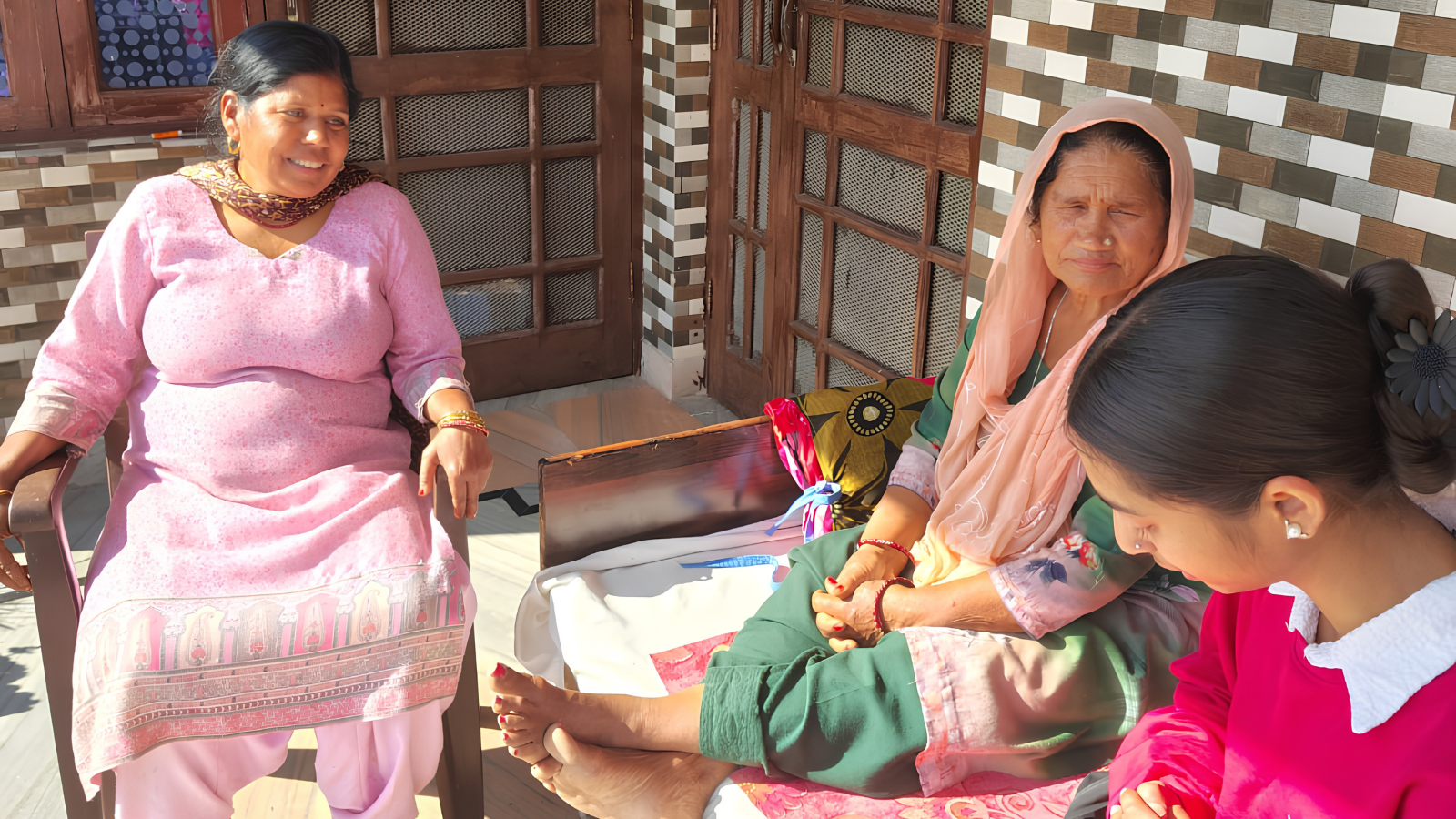
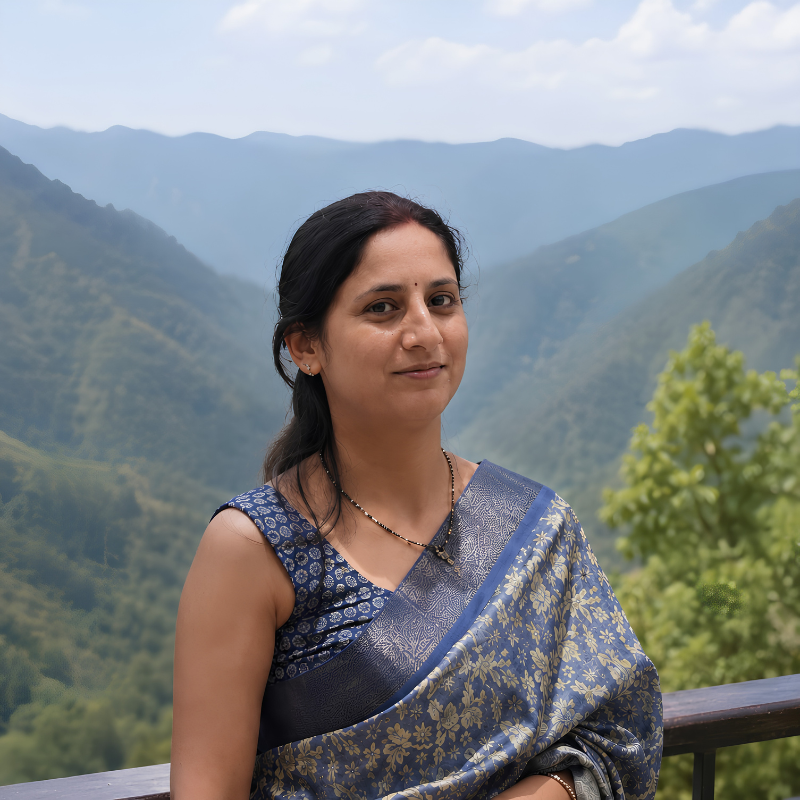
Enlightened India Foundation is a women-led nonprofit founded in 2021 in Kangra, Himachal Pradesh. We work with rural communities to understand local needs, develop practical responses, and turn learning from the field into stronger programmes, civic participation and institutional engagement. Our work now connects field research, adaptive education, community learning, governance and advocacy.
MISSION & VISION
Building stronger pathways between communities, evidence and institutions.
Our Mission
To expand opportunities in rural communities by combining locally grounded evidence, practical learning interventions and community-led action to strengthen learning, participation and long-term local capacity.
Our Vision
Rural communities where children and young people have stronger opportunities to learn and adapt, women play meaningful roles in local development, and institutions respond more effectively to evidence from the ground.
HOW WE WORK
We start with the problem, not a predetermined programme.
EIF’s early education work showed us that needs can vary significantly between children, households and communities. A standard intervention cannot always respond to those differences.
That experience shaped how we work today. We gather evidence to understand a problem, use that evidence to design or adapt a response, learn from implementation, and carry those insights into wider community and institutional engagement.
01. Understand
We use surveys, assessments, field research and community conversations to understand needs in context.
02. Respond
We turn those insights into practical learning, community and civic interventions designed around local realities.
03. Strengthen
We use lessons from implementation to improve our programmes and inform research, advocacy and institutional engagement.
WOMEN-LED LOCAL LEADERSHIP
Leadership rooted in the communities we work with.
EIF is women-led, and much of our field work is carried out by young women from the communities where we work. Their familiarity with local households, schools and village institutions helps build trust and brings context that is difficult to gain from short-term external engagement.
We combine that local knowledge with structured training, documented research methods and clear programme responsibilities. Over time, team members take on greater roles across research, programme delivery, community engagement and organisational coordination.
EXECUTIVE TEAM
A small team working across closely connected roles.
EIF’s Executive Team brings together the people responsible for the organisation’s research, programmes, field implementation and day-to-day operations.
Permanent
president
Smita Choudhary
Leads EIF’s organisational strategy, research, partnerships and external engagement, with a focus on connecting evidence from rural communities with programme development and institutional engagement.
director
Shivati Jasrotia
Leads programme design and learning quality, including child assessments, adaptive learning approaches, curriculum development and the academic direction of EIF’s education work.
Program coordinator
Priyanka
Coordinates programme implementation and community engagement, including surveys, field operations, data processes and work with local communities and village institutions.
Non-Permanent
Field Associate
Diksha Thakur
Supports child assessments, community surveys and learning activities, combining field data collection with direct engagement with children and families.
Research Assistant
Tamana
Recently joined EIF’s research team and will support field research, surveys and data collection.
Research Assistant
Vanshika Kumari
Recently joined EIF’s research team and will support field research, surveys and data collection.
GOVERNANCE
Oversight, accountability and institutional direction.
EIF is governed by its Board of Trustees, which is responsible for organisational oversight, financial accountability, statutory compliance and long-term institutional direction.
At EIF’s current stage, some trustees also hold roles within the Executive Team. These responsibilities are presented separately because governance and day-to-day operations serve distinct functions within the organisation.
Smita Choudhary
Chairperson, Board of Trustees
Provides overall governance leadership and oversight of EIF’s institutional direction, accountability and compliance.
Shivati Jasrotia
Treasurer
Oversees financial governance, including financial controls, reporting and accountability to the Board.
Priyanka
General Secretary
Supports Board administration, institutional records and coordination of governance processes.
RESPONSIBLE PRACTICE
Building trust through clear standards and responsible systems.
As EIF expands its research and community work, we are strengthening the practices that guide how we engage with participants, handle data and communicate evidence.
SAFEGUARDING MECHANISM
Ethical Engagement
Safeguarding principles guide our work with children, young people and communities across every research and programme activity.
DATA PROTECTION
Responsible Use of Data
Personal and research data are handled with care, protecting privacy, confidentiality and informed participation across every activity.
OPEN RESEARCH
Accessible Evidence
Our published research remains openly accessible, with persistent DOI records and clear licensing information for public use and reuse.
RESEARCH STANDARDS
Transparent Methods
Our reports clearly document methodology, sample size, study scope and limitations so findings can be understood in context.
WORK WITH US
Interested in our work?
We welcome conversations with researchers, institutions, funders and organisations interested in rural education, community research, local governance and women-led development.